Money hazards: The #1 hazard to your financial security, and for many people, it's getting worse.

This will not be news to you. But we're here not only to expose the hidden money hazards you may not be aware of, but also those you may well know about but haven't solved yet.
Equifax, the credit data company, just released a study revealing that consumer debt reached an all-time high of $18.19 trillion in March.
Most of the increase came from subprime borrowers opening new bank cards and carrying higher balances. "Subprime" refers to households living on the margins with below-average credit.
So the people who are financially hurting the most are digging themselves deeper into debt. They may have no other options if their incomes just aren't keeping up with their monthly expenses — made worse by inflation.
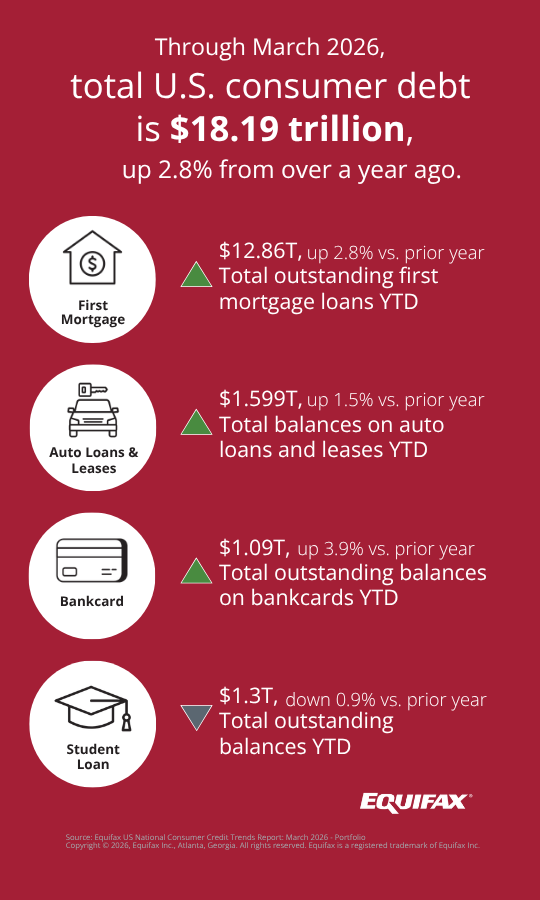
Outstanding balances in revolving credit, specifically bank cards, are up almost 4% year-over-year, Equifax said, outpacing the March 2026 inflation rate of 3.3%.
"We are seeing an expansion in the subprime market that underscores the widening gap of the K-shaped economy," said Maria Urtubey, Equifax advisor. "Lenders originating more bankcard accounts for consumers in subprime while also increasing total credit limits suggests that, for the lower economic tier, credit may have moved beyond a financial tool and may be becoming a necessity for managing the rising costs of living."
The irony here is that the government debt, what you hear called the "deficit," is compounding the consumer debt issue by prolonging and expanding inflation: the higher cost of consumer goods.
Two things have to happen:
- The government has to go on a debt diet.
- We do too.
Borrowing money is essential in today's world, I get it. But too much debt, at too high a price, puts us behind schedule on our priority to build wealth over the long term.
Think of debt his way:
- Debt on a house (a mortgage) can be good, because it's an appreciating asset.
- Debt on a vehicle is often unavoidable, but it is financing a depreciating asset (losing value).
- Debt on a credit card can be the most expensive of all — and can we really remember what that balance forward actually purchased?
For most of us, debt is a lingering, long-term money hazard. It doesn't have to be. We will continue to chip away at this money hazard with actionable ideas in upcoming posts.